
PS1 BIOS Download PSX BIOS Files for DuckStation (All Regions)
Playing vintage retro games on your modern computer is an incredible experience. You can turn your desktop screen into a retro gaming center very easily. However, you must configure your core simulation settings correctly before loading any vintage game files. Many players try to jump straight into their favorite software titles without preparation. They end up staring at a completely broken screen layout or facing immediate engine crashes. This happens because the standalone emulator app requires authentic console system keys to operate. This comprehensive guide will show you how to set up your system layout, step by step.
Setting up your virtual disc drive requires a small amount of file management. To see how these system assets operate on later generations of desktop software setups, check out our primary ps2 bios page. It will give you a great foundation before shifting to older retro console files. Let us jump right into the world of high-performance classic emulation.
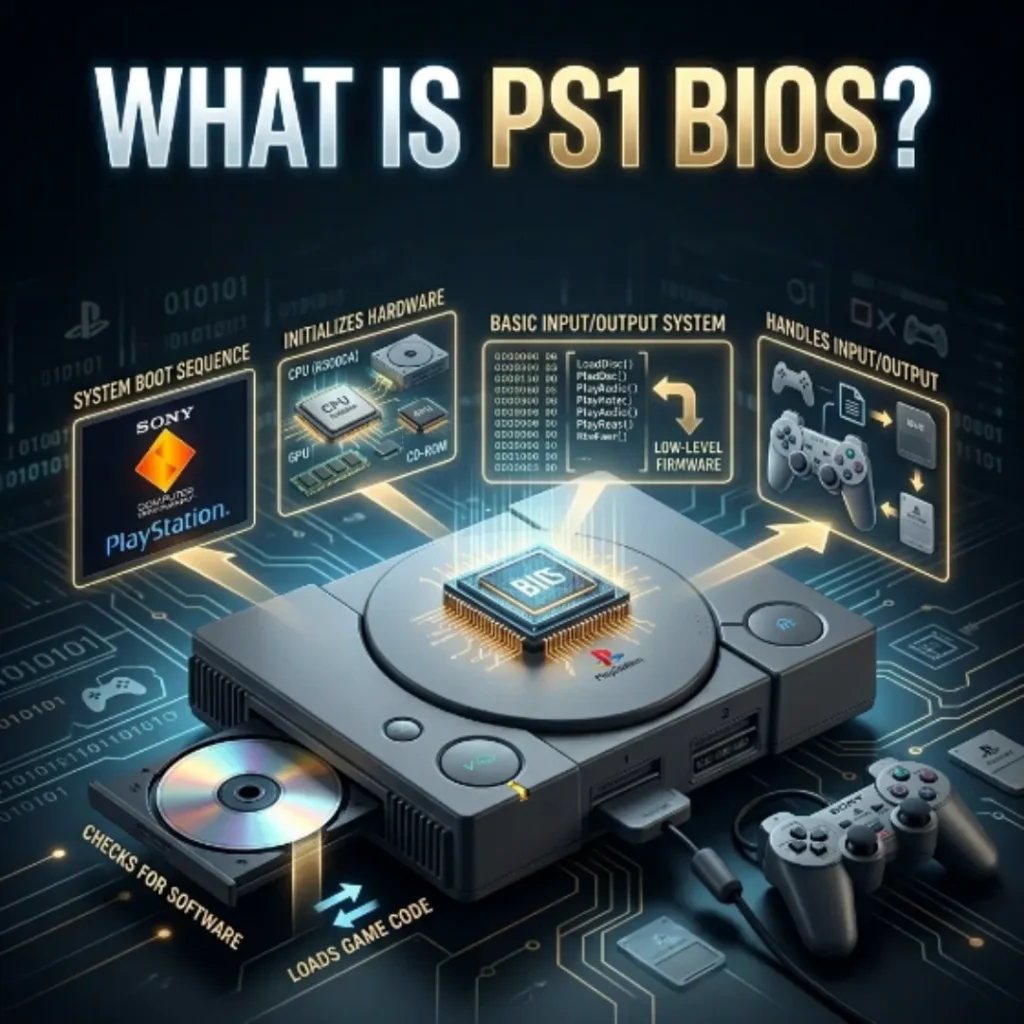
What Is PS1 BIOS?
A hardware binary file acts as the internal system operating software of the original home console. The app engine needs this file to process core instructions from the original circuit board. It serves as the primary translator for legacy machine-code lines. Without this core asset loaded into your system drive, the app will remain completely unresponsive. You cannot boot your favorite 3D action titles or classic arcade memories without it.
The software utilizes this background code to manage initial data reading routines safely. Think of it as a virtual key that opens up the media tracks inside your game files. Finding a clean copy of a verified psx bios package is an absolute requirement for stable operation. It builds a reliable software foundation that bridges the gap between your modern processor and vintage game code.
Why DuckStation Needs a PS1 BIOS File
The standalone emulator app is highly optimized for performance, but it remains an empty shell without console system data. The simulation engine relies on these specific files to replicate authentic console timing cycles perfectly. It needs these assets to decode complex sound frequencies and handle virtual card data blocks. Skipping this configuration step will trigger a severe core initialization breakdown during the boot phase.
Using an authentic binary block allows the rendering engine to calculate polygon shapes correctly. This setup eliminates common graphical bugs and ensures your text windows render without missing character blocks. Grabbing a proper ps1 bios for duckstation path configuration is vital if you want your software to maintain perfect compatibility ratings. It eliminates performance guesswork from your retro setup sessions.
PS1 BIOS Download (All Regions)
Securing your core system asset package is a simple process if you stick to verified distribution networks. Different international game versions require specific system codes to run successfully. If you try to match a Japanese disc image with an American system file, the app will block the process. Finding a working ps1 bios download path on generic internet search forums can be risky due to corrupted links.
We host verified, clean dumps for all major international deployment zones to keep your setup simple. Every archive file is tested by hand to ensure complete safety and optimal data layout. Download the specific option that matches your active game media collection below.
USA (NTSC-U) — scph5501.bin
This system version manages all retail software titles distributed across North American territories. It is the most common default choice for retro enthusiasts who love fast action and role-playing games. The system code inside the scph5501.bin package is highly optimized to ensure fast loading times. Make sure you unpack the archive completely to expose the raw data before linking it to your application.
Japan (NTSC-J) — scph5500.bin
This specific asset format is necessary if you enjoy importing rare imports or unique fighting games. It contains the exact character encoding maps needed to display Japanese text inside game menus without errors. Without this file in your directory layout, dialogue boxes will display broken characters. It runs flawlessly on modern machines without generating memory layout conflicts.
Europe (PAL) — scph5502.bin
This file handles retro games released across European and Australian markets. These specific game images often include multi-language selection menus built directly into their program scripts. The file manages the unique frame timing structures of European software editions effortlessly. Load this specific file if your disc image files carry the European regional classification label.
Full PS1 BIOS Pack (All Regions)
If you own a massive collection of games from all over the world, this complete archive bundle is your best choice. It combines all international system models into one single un-nested folder path. Downloading this complete package saves you from hunting down separate files later on. It gives your virtual layout engine the flexibility to switch system rules automatically based on the game you select.
PS1 BIOS File Details at a Glance
Before moving your downloaded files into your application paths, it helps to understand what real system assets look like. This basic step prevents you from accidentally installing fake tools or malware scripts from bad web portals. You need a trusted bios ps1 distribution point to protect your desktop folders. To see how these system paths are managed inside a unified multi-system dashboard, read our comprehensive ps2 bios best for retroarch setup guide right now.
| Detail | Specification |
| File Format | .bin (Binary Code Archive) |
| File Size | Exactly 512 KB per individual file |
| Target Core | 32-bit Console Architecture |
File Format
A real console system dump always utilizes the standard dot-bin file extension once it is fully unpacked. If you find an asset that uses an executable dot-exe or installer dot-msi extension, delete it immediately. Real system codes are raw data tracks, not interactive software applications or installation wizards.
File Size
An authentic individual console system dump file must be exactly 512 kilobytes in size. If a website offers a system archive package that is hundreds of megabytes long, it is a fake file link. Keep your hard drive storage clean by deleting bloated files immediately.
Compatible Emulators
These specific binary assets interface beautifully with all modern software setups. They provide stable performance numbers inside advanced tools like RetroArch and classic plugin wrappers. The internal software interface configures structural paths automatically once the file values are confirmed.
Compatible OS
The core application files support all major modern desktop operating setups cleanly. You can run the program on Windows 10, Windows 11, Linux distributions, and modern macOS setups. The binary translation system operates perfectly across all platforms without requiring complex custom scripts.
Compression
System archives are usually distributed inside compressed dot-zip or dot-7z containers to save bandwidth. You must use a clean extraction utility tool to open these packages after downloading them. The emulator engine cannot read binary codes if they remain locked inside a compressed container.
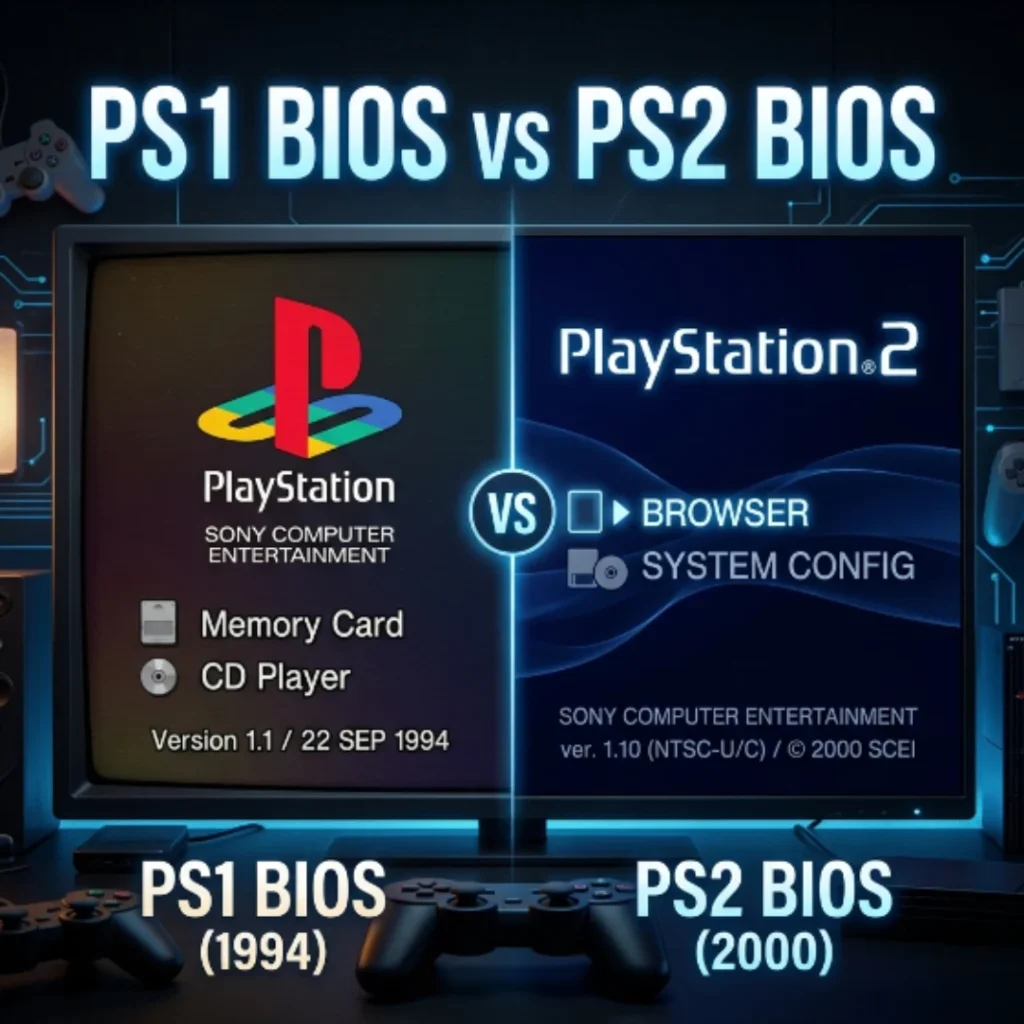
PS1 BIOS vs PS2 BIOS — What Is the Difference?
While both files act as the operating minds of their respective machines, they feature completely different code structures. The earlier system relies on a lightweight 32-bit architecture block that fits into a tiny memory footprint. The later console revision uses a much more complex 64-bit instruction layout to manage heavy 3D graphics calculations. You cannot use these files interchangeably inside your emulation apps.
Each application plugin is built to look for an exact system structure. Trying to force an older core to read a modern file will cause immediate initialization crashes. If you are currently setting up a separate application loop for the subsequent console generation on your PC, check out our pcsx2 bios layout manual to configure your settings cleanly.
Understanding PS1 BIOS Versions (SCPH Models Explained)
The original manufacturer updated the internal console hardware several times during its commercial lifespan. Each new model release received a specific hardware tracking label known as an SCPH version number. Let us look at how these historical model revisions behave inside modern simulation software.
SCPH-1001 — Original USA Model
This file version represents the early launch model of the classic machine distributed across North America. It features the classic audio interface code layout that retro music fans highly praise. While it remains a very famous piece of gaming history, it uses older code lines. The scph1001.bin file works well, but it sometimes exhibits minor timing variances inside modern apps.
SCPH-5501 — Most Stable for DuckStation
This system file version belongs to the mid-lifecycle revision of the physical console hardware. The original engineers rewrote major portions of the internal code to fix bugs and improve data loading speeds. It is widely considered the absolute gold standard for modern simulation apps. It provides perfect game compatibility ratings across the entire software library.
SCPH-7001 — Later Revision
This file belongs to the late-stage production run of the physical console line. It introduces updated hardware security handshakes and altered memory layout rules. While it performs adequately inside modern apps, it offers no tangible performance benefits over the more popular mid-lifecycle versions.
Which SCPH Version Should You Use?
You should always make the 5501 model variant your primary system file choice whenever possible. It provides the cleanest memory translation and offers maximum frame rate stability during complex 3D rendering scenes. It ensures that your modern simulation app stays completely stable during long gaming sessions.
Which PS1 BIOS Should You Use for DuckStation?
For a flawless and stress-free user experience, loading a clean version of the 5501 model file is highly recommended. This specific asset forms the most stable connection with modern graphics rendering pipelines like Vulkan and OpenGL. It handles memory timing blocks perfectly, which prevents sudden audio stutters during cinematic cutscenes.
Selecting this version ensures your standalone emulator app functions correctly without requiring constant custom overrides. It allows you to build a reliable playstation one bios directory that reads global game files effortlessly.
How to Set Up PS1 BIOS in DuckStation (Step-by-Step)
Linking your system files to the application interface is very easy. The entire process takes only a few steps if you manage your folders logically. Follow these layout instructions closely to boot your first game file successfully.
Step 1 — Download & Extract the BIOS File
First, download our verified global system archive directly to your hard drive space. Open your download directory and use a free utility tool like 7-Zip to unpack the package. This extraction step will reveal the raw system files required by the simulation engine.
Step 2 — Place BIOS File in the Correct Folder
Open your primary user documents directory and locate the folder named DuckStation. Create a fresh subfolder inside it labeled bios to keep your files organized. Copy your extracted binary data blocks and paste them directly into that new directory path.
Step 3 — Open DuckStation & Select BIOS Directory
Launch the main application interface on your desktop screen to open the dashboard layout. Click on the settings option located on the top menu bar and open the bios settings panel. Click the browse option next to the path directory field.
Step 4 — Verify BIOS Is Detected
Navigate to the new folder where you pasted your binary data assets and click select folder. The application interface will instantly scan the path and display your regional file models cleanly in the menu list. This confirmation means the software handshake was successful.
Step 5 — Launch a PS1 Game & Confirm Setup
Go back to the main app dashboard and click the ” Add Game Directory ” button. Select the folder where your game disc images are saved. Click on your preferred title to trigger the boot sequence. The program will execute a clean console start and run your game immediately.
How to Confirm PS1 BIOS Is Loaded in DuckStation
You can easily check if your application is reading your system assets correctly during active gameplay. While a game is running on your screen, press the escape key on your keyboard to pause the simulation engine. Look at the status information bar displayed at the very bottom of the game window interface.
The text field will explicitly display the exact region and model version number currently running in the background. If you see your selected model name listed there cleanly, your setup is operating perfectly.
Common PS1 BIOS Errors in DuckStation & How to Fix Them
Even with an excellent software framework, running vintage game environments can occasionally trigger a minor technical snag. Most configuration errors happen because a file link was broken or a directory path permission was revoked. Let us look at how to resolve these small bugs quickly.
BIOS Not Found Error
This warning alert blocks your gameplay if the simulation engine opens its configuration path and finds empty directories. To clear this issue, verify that your binary files are completely unzipped. Confirm that they feature the proper dot-bin file extension rather than remaining hidden inside a zip archive.
Black Screen After Loading Game
If your display remains completely dark right after you select a game title, you are likely using a corrupted game image file. Try switching your primary video rendering tool to the Vulkan API option inside your graphics settings panel to clear the boot freeze.
Invalid or Incorrect BIOS File
This error indicates that the application interface detected your file, but the internal data signatures are corrupted. This issue usually happens after a bad file download sequence. Delete the broken file from your folder and grab a fresh copy from our verified download areas to fix the issue.
Region Mismatch Error
This system block appears if you attempt to launch an overseas game disc image using a local system file. Head back to your system configuration paths and download a full global bundle pack. This arrangement allows the engine to match regional codes automatically.
Game Crashes at Startup
If clicking a game title causes the entire application window to close instantly, your path configurations are pointing to a missing folder. Re-open your directory settings panel and make sure your primary system directory line points accurately to the folder holding your core assets.
Is Downloading PS1 BIOS Safe?
Yes, securing a clean console system binary file package from an authorized preservation platform is completely secure. The raw code data arrays are static system tracks that do not contain interactive scripts or background tracking tools.
As long as you avoid untrusted online portals that bundle their downloads inside executable installer applications, your computer files will stay safe. Stick exclusively to our verified distribution channels to keep your desktop environment secure and clean.
Frequently Asked Questions (FAQs)
Conclusion
Transforming your modern desktop computer into a high-performance vintage arcade setup is a very satisfying project. By combining the latest stable application build with a verified global system file archive, you gain instant access to thousands of classic adventures. Take your time to map your controller button inputs cleanly; keep your game directory paths un-nested; and dive straight back into your favorite childhood gaming memories today.
For users who also run portable applications on mobile operating systems and want to establish matching core paths, you can check out our aethersx2 bios dashboard to grab your mobile configuration steps without any hassle.